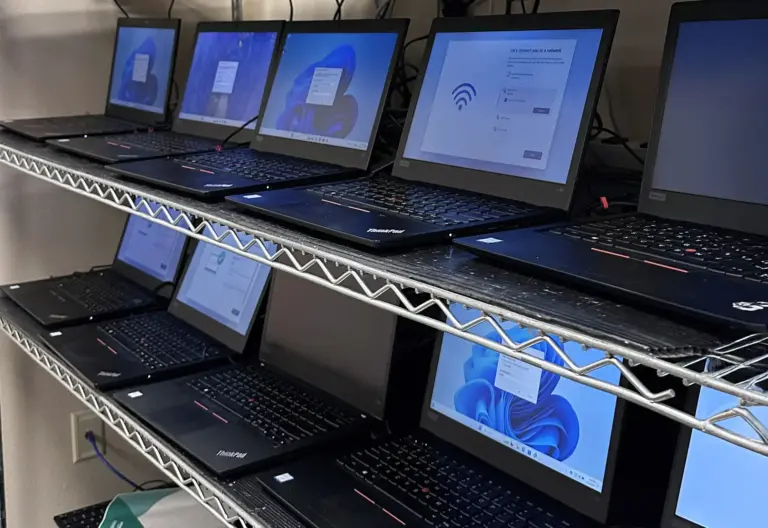

DIY IT asset disposal often feels like a sensible cost-saving move. Old laptops are boxed, servers are retired, and a logistics vendor is called to “take care of it.” On the surface, the numbers look lean. But when organizations analyze the full lifecycle costs — including labor, compliance risk, resale losses, and post-disposal exposure — many discover they are overspending by as much as 32% compared to structured ITAD programs. The true cost of DIY ITAD is rarely visible upfront.
Why upfront savings are misleading
Most DIY ITAD decisions are based on a narrow cost view. Transportation, storage, and basic recycling fees are easy to quantify. What gets excluded are process costs such as asset inventory reconciliation, serial-level tracking, secure data erasure validation, and audit documentation. These activities still need to happen — they’re just absorbed internally, where inefficiencies and errors accumulate unnoticed.
Internal labor quietly inflates total cost
IT teams are not disposal teams. When infrastructure engineers and security professionals spend time wiping drives, validating assets, or coordinating shipments, organizations pay senior rates for low-leverage work. These hours are rarely tracked against disposal budgets, yet they directly impact delivery timelines and opportunity cost. Over multiple refresh cycles, internal labor becomes one of the largest hidden expenses in DIY ITAD.
Data security risk is expensive when it goes wrong
Even a single improperly handled storage device can trigger disproportionate consequences. Incident response, forensic investigation, legal review, and customer notifications carry significant financial and reputational costs. DIY disposal often lacks standardized wiping verification and third-party attestation, making it harder to prove due diligence. In regulated environments, the absence of defensible documentation can be more damaging than the incident itself.
Compliance gaps emerge months later
Environmental and data protection regulations do not end when equipment leaves the building. Auditors often ask for disposal proof long after the fact. DIY programs frequently struggle to produce complete records, especially when asset handling is decentralized. Retrofitting compliance after an audit notice is far more expensive than building it into the disposal process from the start.
Resale value erosion is rarely measured
Many organizations underestimate how much value remains in retired IT assets. Without proper testing, grading, and refurbishment, reusable devices are prematurely recycled or damaged during handling. Professional ITAD vendors operate resale channels that consistently recover more value per asset. DIY approaches usually lack the infrastructure and market access to achieve comparable returns.
Common hidden cost drivers in DIY ITAD
- Internal IT and security labor diverted from core work
- Missing or incomplete data destruction documentation
- Lower resale recoveries due to poor handling
- Audit remediation and regulatory penalties
- Environmental disposal and hazardous material costs
Why structured ITAD changes the economics
Managed ITAD programs consolidate logistics, compliance, data security, and remarketing into a single accountable workflow. Costs become predictable, risks are transferred, and recovery value is measured rather than guessed. When organizations compare total cost of ownership instead of surface-level expenses, professional ITAD consistently outperforms DIY approaches.
Concluding thoughts
DIY IT asset disposal appears economical only when viewed in isolation. Once labor, compliance exposure, security risk, and lost resale value are included, the financial argument weakens quickly. Treating ITAD as a governed process rather than a cleanup task reduces overspend, limits risk, and delivers measurable value over time.
Red Flags That Signal It’s Time to Change Your ITAD Vendor
Most ITAD vendor relationships don’t fail dramatically — they erode quietly. Documentation becomes inconsistent, response times slip, and small exceptions start to feel routine. The danger lies in waiting until a data incident or audit exposes these weaknesses. Recognizing early warning signs allows organizations to switch vendors before cost, risk, and compliance issues escalate.
Data destruction proof lacks clarity or consistency
Verifiable data destruction is non-negotiable. Certificates should clearly reference asset serial numbers, destruction methods, timestamps, and responsible parties. Vendors who issue generic confirmations or delay documentation leave clients exposed during audits and investigations. Weak certificates are one of the earliest indicators of operational immaturity.
Chain-of-custody controls are fragile
A reliable ITAD partner maintains uninterrupted visibility from pickup to final disposition. When custody records are manual, fragmented, or difficult to reconcile with physical inventories, accountability breaks down. Any vendor unable to demonstrate auditable chain-of-custody processes introduces unnecessary risk.
Environmental compliance is unclear
Responsible e-waste handling requires more than assurances. Vendors should provide evidence of certifications, downstream processor transparency, and disposal manifests. If environmental compliance conversations rely on trust rather than documentation, liability may still rest with the asset owner.
Resale and recovery reporting lacks transparency
Healthy ITAD programs provide clear insight into asset grading, refurbishment outcomes, and resale recoveries. When recovery values decline without explanation, or reports lack detail, organizations may be losing recoverable value. Opaque financial reporting is often a sign of weak remarketing capabilities.
Operational issues occur repeatedly
Occasional delays happen. Repeated missed pickups, damaged assets, or poor communication indicate deeper process problems. These issues increase on-site risk exposure and force internal teams to compensate for vendor shortcomings, increasing total cost and frustration.
Reporting and system integration are outdated
Modern ITAD should integrate with asset management systems and provide searchable, real-time reporting. Vendors that rely on static spreadsheets or ad-hoc PDFs slow audits and reconciliation efforts. Poor reporting capability often reflects broader technology gaps.
Transparency and ethics raise concerns
Vendors should openly disclose downstream partners and recycling channels. Reluctance to share this information, or evasive responses about subcontracting, raises serious governance concerns. Ethical opacity is a strong signal to reassess the relationship.
Questions to ask when evaluating a replacement vendor
- How is data destruction verified and documented at the asset level?
- What certifications and environmental standards are maintained?
- How is chain-of-custody tracked and audited?
- What resale recovery metrics are reported, and how often?
- Are downstream processors disclosed and auditable?
Concluding thoughts
An ITAD vendor should reduce risk, improve compliance, and recover value — not create uncertainty. If documentation is weak, processes are opaque, or issues recur, switching vendors is not disruptive; it’s responsible governance. Identifying these red flags early allows organizations to protect data, finances, and reputation before problems surface publicly.