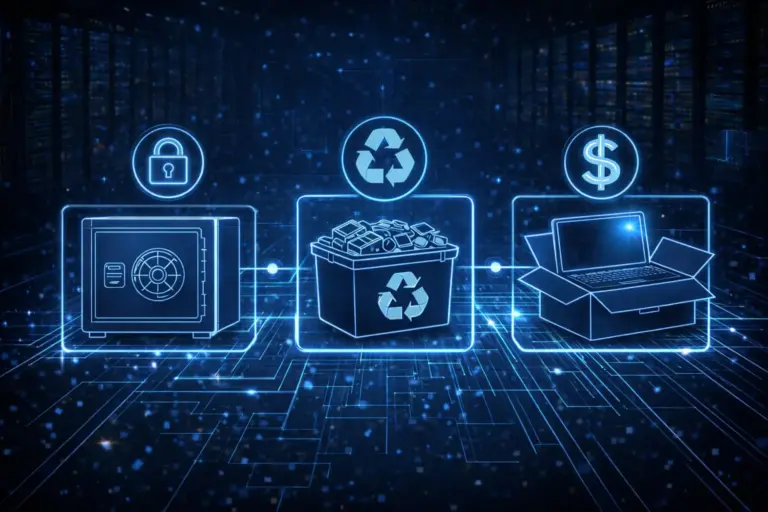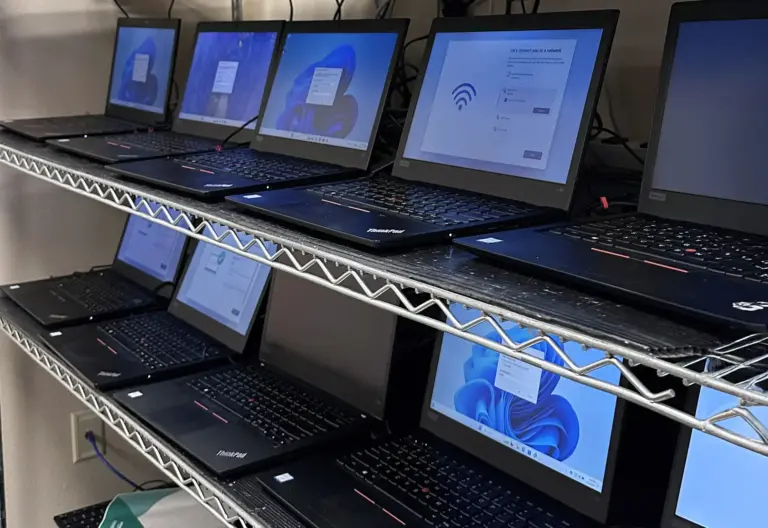

Enterprise security strategies are heavily focused on threat detection, prevention, and response. However, one critical area continues to be overlooked: what happens to IT assets at the end of their lifecycle. As organizations refresh infrastructure, retire devices, and scale operations, the risk associated with improper asset disposal increases significantly. IT Asset Disposition (ITAD) is not just an operational process. It is a core component of a comprehensive security strategy.
The Overlooked Risk in IT Security
Most security investments are directed toward active environments such as networks, endpoints, and applications. In contrast, decommissioned assets often fall outside strict security controls.
Retired servers, laptops, and storage devices frequently contain sensitive data, including customer information, intellectual property, and internal communications. Without proper sanitization and handling, these assets become a high-risk entry point for data breaches.
At the same time, increasing regulatory scrutiny around data protection and privacy has elevated the consequences of improper disposal. Security is no longer limited to live systems. It extends across the entire lifecycle of an asset.
Key Challenges Enterprises Face
- Inadequate data sanitization processes
Many organizations rely on basic deletion methods that do not fully eliminate recoverable data - Lack of visibility and tracking
Limited oversight of retired assets increases the risk of loss, theft, or unauthorized access - Fragmented ownership across teams
IT, security, and procurement often operate independently, leading to inconsistent processes - Compliance and regulatory exposure
Failure to adhere to standards can result in penalties and reputational damage - Unstructured vendor engagement
Working with uncertified disposal vendors introduces additional security and compliance risks
A Structured ITAD-Driven Security Approach
To mitigate risk, enterprises need to integrate ITAD into their broader security framework.
- Establish standardized data sanitization protocols
Adopt certified methods such as data wiping, degaussing, or physical destruction based on asset type - Implement asset tracking and chain of custody
Maintain end-to-end visibility from decommissioning to final disposition - Align ITAD with security and compliance teams
Ensure policies are consistent with regulatory requirements and internal governance standards - Engage certified ITAD partners
Work with providers that offer documented processes, compliance certifications, and audit support - Incorporate ITAD into lifecycle management
Treat disposal as a planned phase within the asset lifecycle, not an afterthought
Business Impact at the Enterprise Level
A well-defined ITAD strategy delivers both risk mitigation and operational value.
- Reduced data breach risk
Proper sanitization eliminates exposure from retired assets - Regulatory compliance assurance
Structured processes support adherence to data protection standards - Improved audit readiness
Documentation and traceability simplify internal and external audits - Cost recovery opportunities
Refurbishment and resale of assets can generate residual value - Enhanced brand trust
Demonstrates a proactive approach to data security and responsible asset management
Conclusion
Security does not end when an asset is decommissioned. In many cases, the risk is just beginning. IT Asset Disposition represents a critical gap in most enterprise security strategies, one that can no longer be ignored. By integrating ITAD into the broader security framework, organizations can close this gap, reduce exposure, and ensure that data remains protected across the entire lifecycle of their IT assets.