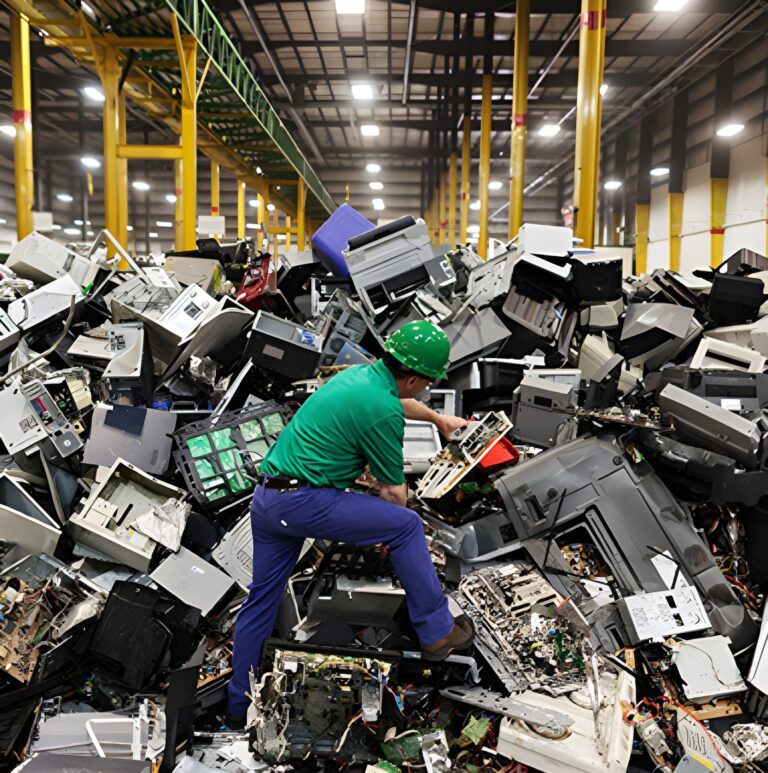

In early 2025, a fast-growing SaaS company preparing for a major funding round decided to refresh its endpoint fleet ahead of a security review. More than 600 laptops and servers were decommissioned across multiple offices. To save time and budget, disposal was handled internally. Drives were wiped using basic tools, devices were handed to a local recycler, and no independent verification was obtained.
Six months later, customer data tied to internal analytics systems appeared for sale on a dark-web marketplace. The breach did not originate from production systems. Investigators traced it back to resold laptops that still contained recoverable data, including cached credentials and internal documentation. Because the company could not produce verifiable destruction certificates or a documented chain-of-custody, the incident was classified as a failure of reasonable security controls. Customer notifications followed, contracts were paused, and the funding timeline slipped.
This scenario is becoming increasingly common. In 2026, a growing share of breach investigations trace back to retired and improperly disposed IT assets, not live cyber intrusions.
Retired assets remain regulated data holders
Powering down or decommissioning hardware does not eliminate data obligations. Storage media frequently contains personally identifiable information, authentication artifacts, system logs, or confidential business data long after systems are retired. When that data is exposed, breach notification and remediation requirements apply regardless of whether the asset was in active use.
Regulators and auditors increasingly expect organizations to protect data throughout its lifecycle, including end-of-life handling. Improper disposal is no longer viewed as an operational oversight, but as a breakdown in security governance.
Verifiable data destruction creates defensible security posture
ITAD reduces breach exposure by enforcing standardized, verifiable data destruction. Certified wiping, degaussing, or physical destruction is applied based on data sensitivity and risk classification. Each asset is tracked at the serial level and linked to a destruction record.
When incidents occur, documentation matters. Organizations able to demonstrate verified destruction are better positioned to contain investigations and limit enforcement scope. Without proof, even minor exposures can escalate into prolonged reviews and legal scrutiny.
Chain-of-custody prevents silent asset loss
A significant number of disposal-related breaches occur not because data wasn’t wiped, but because assets went missing during transport or storage. Once custody is broken, visibility disappears and accountability follows.
Structured ITAD programs maintain documented chain-of-custody from pickup through final disposition. Secure transport, controlled storage, and logged handoffs ensure assets are never unaccounted for, closing a major gap exploited in post-incident investigations.
ITAD reduces insider and third-party exposure
Informal disposal processes create opportunities for unauthorized access. Employees, contractors, or recyclers may encounter data-bearing devices without oversight or accountability. Certified ITAD providers operate under audited procedures, restricted access controls, and contractual liability. This significantly lowers the risk of intentional misuse or accidental exposure during asset retirement.
Compliance posture directly affects breach outcomes
In breach response, enforcement bodies and legal teams focus heavily on whether reasonable safeguards were in place. Organizations with mature ITAD programs- including custody records, destruction certificates, and retention policies- are typically able to narrow investigation scope and resolve incidents faster.
By contrast, organizations relying on ad-hoc or DIY disposal often face extended inquiries, higher remediation costs, and increased litigation exposure due to the absence of defensible controls.
ITAD aligns with modern security and governance frameworks
Security programs in 2026 emphasize continuous risk reduction across the asset lifecycle. ITAD supports these models by treating retired assets as untrusted until verified destroyed. Integration with asset management and governance platforms ensures risk exposure is tracked from procurement through disposal, eliminating blind spots after hardware leaves production.
Common breach scenarios ITAD helps prevent
- Resold devices containing recoverable customer or employee data
- Lost laptops or servers during office closures or relocations
- Unauthorized access during recycling or transport
- Incomplete wiping without verification
- Inability to prove due diligence after breach disclosure
Why underestimating ITAD still causes major incidents
The company in the opening example did not ignore security- it underestimated asset disposition. Like many organizations, it assumed risk ended when devices left production. In reality, disposal without verification simply shifts risk to a less visible part of the lifecycle. Without structured controls, accountability and proof vanish when they are needed most.
Concluding thoughts
In 2026, data breach prevention extends beyond networks and endpoints. Retired assets represent one of the most underestimated attack surfaces in modern organizations. ITAD reduces breach exposure by combining verifiable data destruction, controlled custody, and defensible documentation. Treating ITAD as a core security function- not an operational afterthought- significantly lowers both breach probability and impact.